At a glance
Wuthering Waves vs Genshin Impact is a choice between two free-to-start open-world RPGs. Decide what you want to practice between quests.
The short answer: Pick Wuthering Waves for reactive combat; pick Genshin for elemental-party planning. As of Nov. 4, 2026, Genshin’s Sept. 28, 2020 launch gives it over six years of history, versus roughly two-and-a-half since Wuthering’s May 2024 launch. That difference matters for catch-up expectations, but neither has a verified maximum time to finish all current and future content.
Launch dates need context: Genshin’s developer-authored announcement confirms the original worldwide PS4 date. Wuthering’s Epic listing dates its initial PC release May 23, 2024; Kuro’s announcement reported by Gematsu uses May 22 for the Western launch. Its April 28, 2025 Steam arrival is a later storefront release.
Wuthering Waves or Genshin Impact at a glance

Wuthering Waves gets the edge for a newcomer primarily seeking combat timing decisions. Genshin wins if combining elements is the activity you want to understand first. Those are preferences supported by documented systems, not a claim that one game lacks the other’s strengths.
| Decision | Wuthering Waves | Genshin Impact | Edge |
|---|---|---|---|
| Reactive combat focus | Evasion, counters and Echo Skills | Elemental attacks and reactions | Wuthering for timing practice |
| Party-building focus | Resonators with distinct abilities | Combinations across seven elements | Genshin for elemental planning |
| Roaming a world | Open exploration and mobility tools | Climbing, swimming and gliding | Tie: choose the movement style |
| Launch history | May 2024; Steam followed in 2025 | September 2020 | Genshin for the older history |
| Playing with friends | Co-op advertised on Epic | Online co-op described by PlayStation | Tie: check activity restrictions |
| Spending certainty | Optional purchases | Optional purchases | Tie: no cost advantage established |
| A finite completion target | No verified all-content maximum | No verified all-content maximum | Neither as a fixed-length project |
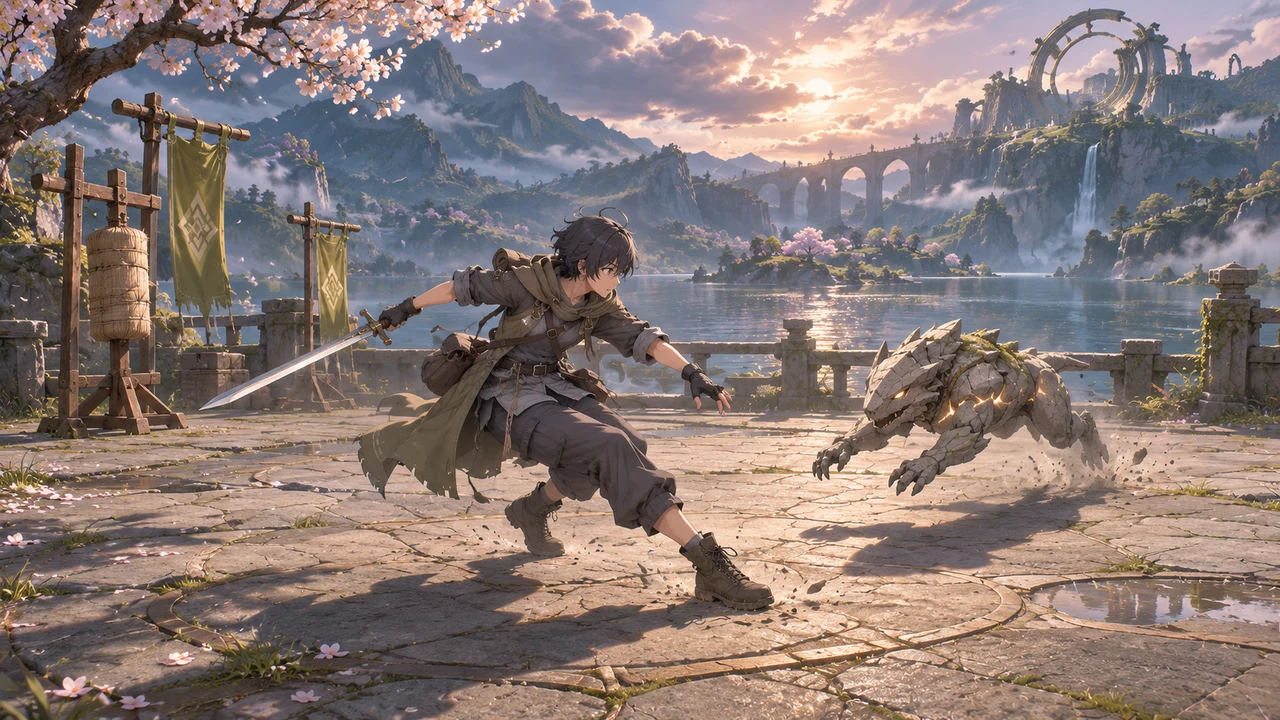
The action illustration depicts a confrontation without measuring response time, difficulty or your PC’s performance.
How do combat, exploration and content commitment differ?

Choose Wuthering for its counter-and-evasion emphasis, or Genshin for elemental combinations. Separate those learning goals from the amount of content waiting beyond the opening hours.
Which combat system should you learn first?
The edge goes to Wuthering Waves for reactive timing. Kuro’s Steam description highlights evasion, Dodge Counter and Echo Skills. Start here if reading an attack and choosing your response sounds more attractive than planning around elemental interactions.
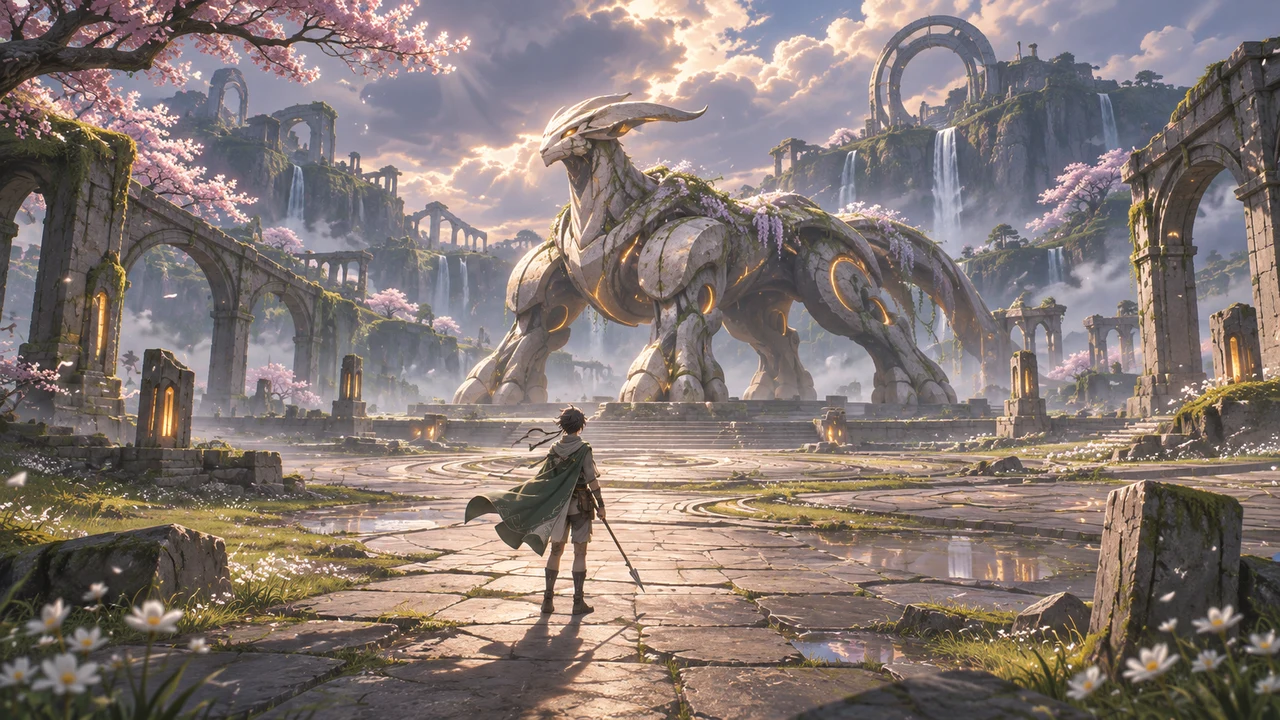
Genshin is the stronger fit for elemental team planning. Its PlayStation description explains how seven elements interact across combat and puzzles. The Genshin frame retains its development disclaimer; it does not establish current reaction rules.
Edge: Wuthering for reactive combat; Genshin for elemental composition.
Does the older game require more time?
Genshin has the longer update history. That is a useful warning to choose your catch-up goal, not permission to manufacture a completion-hour total.
Define the target first: following a story arc, exploring a region and developing a party are different commitments. Release age does not count currently available quests, establish every access requirement or prove the newer game is smaller. Neither history supplies a timetable for your account.
Genshin’s Epic page currently advertises Version 7.2 with additional areas and quests. That supports treating the content list as something that changes. It does not make every advertised feature an immediate starting activity.
Edge: Wuthering if an older release history itself puts you off; no proven winner for fewer completion hours.
Which is easier to treat as a free trial?
Neither earns a spending-fairness win from its storefront alone. Both Epic pages list free entry and purchases, including random items. That establishes the business model, not what an ideal roster costs or how quickly a nonpayer progresses.
Choose a spending rule before a character becomes the reason to stay. There is no controlled comparison here of equal-budget accounts, reward rates or daily chores. A price-of-entry tie should remain a tie.
Edge: Tie on the evidence checked.
Which game should you start?
Start Wuthering Waves if combat practice is your main reason to download an open-world RPG. Start Genshin if elemental combinations and fantasy roaming carry more weight than that combat emphasis.
- Pick Wuthering for evasion, counters and a Resonator-focused action loop. Use the Wuthering Waves systems guide to map the choices before chasing a specialist build.
- Pick Genshin for elemental party planning and exploring Teyvat. The Genshin Impact elements and exploration guide separates those systems from platform and account choices.
- If you already have an account, weigh the enjoyment you still get from it before starting another progression project. A different combat system must justify the switching cost.
How we compared them: publisher descriptions and dated release records checked Nov. 4, 2026. No GameSelecto playtest, frame-rate test, current completion-time census or equal-spending experiment was performed.
If your first priority is reactive combat, Wuthering Waves. If it is elemental-party planning, Genshin Impact.
Sources · checked Nov 4, 2026
- KURO GAMES via Steam — current publisher description; Steam release April 28, 2025
- KURO GAMES via Epic Games Store — publisher description; original release May 23, 2024
- Sal Romano / Gematsu — March 29, 2024 report of Kuro’s May 22 Western launch announcement; historical secondary chronology
- HoYoverse / COGNOSPHERE via PlayStation — current feature description and original release date
- Zhenzhong Yi / miHoYo via PlayStation Blog — August 28, 2020 worldwide PS4 launch announcement
- COGNOSPHERE via Epic Games Store — current publisher description, Version 7.2 and random-item purchases