World of Sea Battle review 2026: slow sailing, rich sandbox
A current review of World of Sea Battle's Age of Sail combat, open economy, trading, guild warfare, risk and 2026 roadmap.
EReview byEthanPublishedReading time7 minAs of official B20 update, 2026 roadmap and Steam sources checked August 31, 2026
Research-based assessment using the sources listed below. This is not a hands-on test and carries no numeric score. Our review method.
Verdict
World of Sea Battle is a niche but promising Age of Sail MMO for players who value deliberate navigation, trade and guild politics over instant action. Its smaller community, developing systems and meaningful loss demand patience, yet those same qualities give the Archipelago real stakes.
The short answer:World of Sea Battle is worth investigating in 2026 if you want to inhabit an Age of Sail economy rather than queue for disconnected ship matches. The official feature overview describes more than 50 ships, open trade, exploration, guild conflict and PvE/PvP activity across the Archipelago and Endless Sea. It is slower and rougher than a mainstream action game, but the world has consequences because cargo, routes and political control matter.
This documentary assessment uses the official B20 update, 2026 roadmap and Steam materials. Endgame balance and current population by region remain outside those sources.
What kind of naval MMO is this?
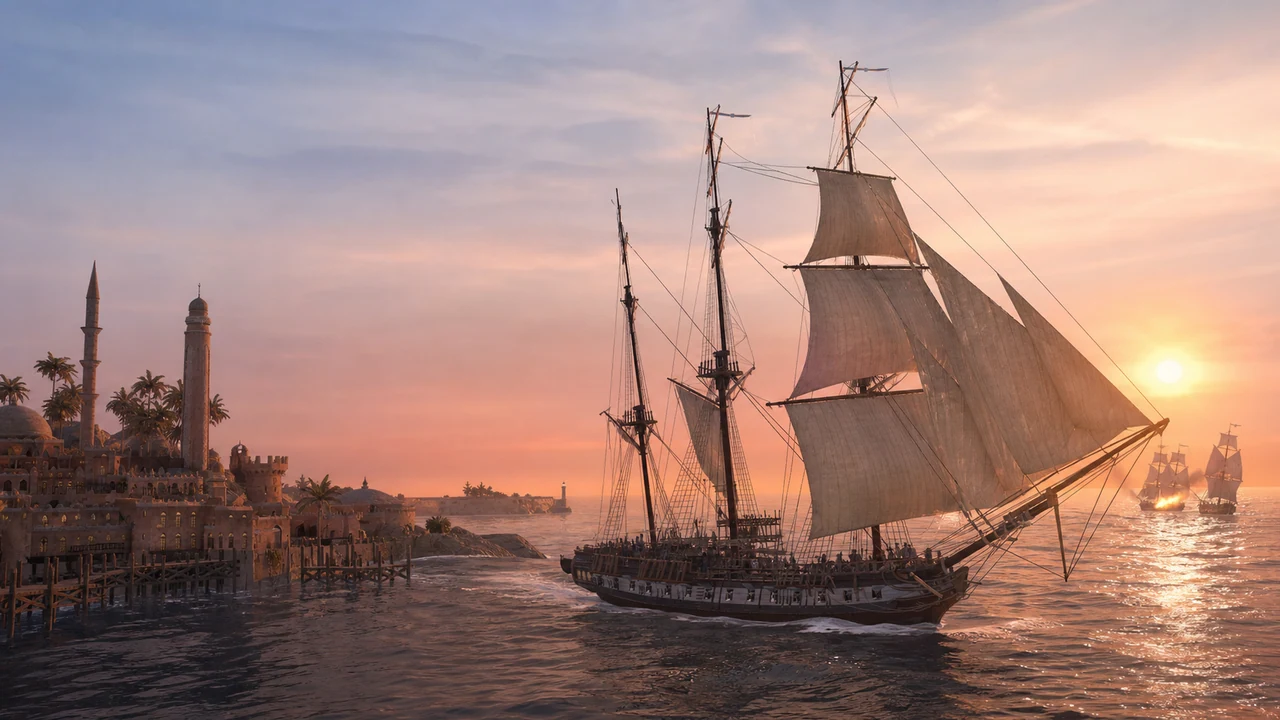
Players command sailing ships directly, managing direction, cannon arcs and positioning. Ports are more than menus: their markets and ownership connect to trade and guild power. A session can involve hauling goods, hunting NPC vessels, exploring or joining other captains for a fight.
The ships range from small craft to heavier warships, creating natural careers and risks. A fast trader values cargo and escape routes; a combat group values firepower, repair planning and coordination. That diversity is the strongest argument for the sandbox.
Does naval combat feel tactical?
Yes, because sailing imposes limits. A broadside must be prepared, wind and approach shape the engagement, and a large ship cannot instantly reverse a mistake. Ammunition, module damage and crew performance create decisions beyond aiming at the center of a target.
The pace will frustrate players accustomed to immediate respawns. Travel and recovery give battles weight, but they also make a poor engagement more costly in time. Learning when not to fight is part of the game.
What should a new captain learn first?
Sailing is the first progression system even when the interface presents ships and equipment as the obvious upgrades. Practice turning through the wind, lining up a broadside and disengaging before risking a valuable cargo. A modest ship handled well teaches more than a larger hull purchased before the captain understands its turning circle and operating cost.
Choose one safe trade route and record its costs rather than following whichever price looks largest. Profit depends on travel time, risk and the return cargo, not only the number shown at the destination. Learn which flag and zone rules apply before attacking or carrying something you cannot afford to lose.
Community matters early. A guild can explain current markets, escort vulnerable routes and turn the open world into shared strategy. The official B20 Naval Supremacy notes document major changes to guild privileges, influence, reputation and the economy, so older advice about guild progression should be checked against the live version.
Is there enough to do outside combat?
Trading and exploration are core promises, supported by cities with their own economies, resources and routes. The B20 Naval Supremacy update expanded guild systems, port battles, economy and smuggling, while the 2026 plan includes new quests, locations and an expanded Endless Sea.
That roadmap is encouraging and also a reminder that the MMO is still developing. Players should join for the current sailing loop, not only for features listed in a future plan.
How does the player economy create real stakes?
A trade route matters because goods, travel time, danger and port conditions interact. The highest listed margin is not automatically the best voyage if the destination leaves the hold empty on the return trip or sends a fragile ship through waters it cannot safely escape. A merchant therefore solves a navigation and information problem, not merely a buying-and-selling menu.
Guild influence increases those stakes. Port control, privileges and shared operations can change which routes feel practical and which conflicts attract organized fleets. A trader benefits from escorts and market knowledge; a combat captain benefits when merchants and producers can replace losses. Those roles make the world more convincing because one player's preparation supports another player's battle.
The economy also creates vulnerability. Cargo and equipment represent time, so an avoidable loss can be more discouraging than defeat in an instanced match. Start with goods that the account can afford to replace, learn the zone and flag rules, and price risk into the route. A smaller reliable profit is better progression than a spectacular margin lost to a predictable ambush.
Market observation should happen across several sessions. One cheap listing may be a temporary surplus, and one empty port may reflect the time of day rather than a permanent shortage. Record purchase price, sale price, travel time and danger. The sandbox becomes strategic when a player understands why a route works and can recognize when conditions have changed.
Is the population large enough for an MMO?
Population is a regional and time-sensitive fact that this review does not pretend to measure from official feature pages. A smaller community can be an advantage when captains and guild reputations become recognizable, but it can also leave markets or group activities quieter outside peak hours. Check the current server list, official community channels and activity during the hours you actually play.
The official 2026 development plan includes quests, guild development, Endless Sea expansion and port-battle work. A roadmap is not a promise that every item will arrive unchanged. Treat delivered B20 systems as evidence of active development and future items as direction, not purchased content.
This is why the game's free entry is important: test sailing, market liquidity and social fit before investing in a demanding ship or guild role.
New captains should also separate a quiet server hour from an empty game. Sailing communities often concentrate around guild events, port conflict and regional evening periods. Observe several sessions, ask when group content occurs and inspect whether common goods actually move through the market. Those checks are more useful than a single population headline because they measure whether the world is active when you can participate.
How risky is the sandbox?
Safer and more dangerous zones create a progression in confidence. The Endless Sea has historically attached material loss to defeat, so cargo value and escort planning matter. Risk is what allows a profitable voyage to feel like an achievement; it is also what can drive away a player after one avoidable mistake.
For a brighter mobile fleet builder with more automation, see our Sea of Conquest review. For instanced vehicle combat with a much larger catalog, compare our War Thunder review.
What did the B20 update materially change?
B20 matters because it connects progression more directly to guilds, ports and reputation. The official notes describe changes to guild privileges, influence, smuggling and economy systems rather than only adding another ship. That kind of update can reshape how existing activities relate: a trade decision affects reputation, port conflict affects access and group progress becomes more visible in the world.
It also makes old advice less dependable. A route, privilege or progression priority learned before B20 may still contain useful principles while being wrong about requirements or rewards. Read the live descriptions and ask an active guild before spending rare resources. The update is evidence of substantial development, not evidence that the current balance is final.
For a prospective player, delivered changes should carry more weight than roadmap promises. B20 can be judged in the client now; future quests and world expansion cannot. Join if sailing, trade and guild stakes are already appealing, then treat planned systems as potential improvements rather than reasons to tolerate a loop that is not yet enjoyable.
Yes for patient sailors, traders and guild players. Start with a modest ship, learn one profitable route and join a community before risking valuable cargo. If the voyage itself is enjoyable, World of Sea Battle offers stakes that match-based naval games cannot. If travel feels like downtime between fights, its deliberate sandbox will remain too slow.
Frequently asked questions
Is World of Sea Battle free to play?
Yes. The official site offers a free client. Optional purchases and live-service terms should still be reviewed in the current launcher or store before spending.
Does World of Sea Battle have server wipes?
The official feature page promotes no server wipes or account resets. Specific seasonal systems and future changes should still be confirmed in current notices.
Can a player focus on trading instead of PvP?
Yes. Trading and production are core careers, but routes exist in a world shaped by conflict. Flag, zone and escort choices determine how much risk a merchant accepts.
How many ships are available?
The official site advertises more than 50 ships, from small craft to ships of the line. Availability and balance can change with updates.
Is World of Sea Battle suitable for short sessions?
Only partly. A short market or preparation session is possible, but travel and coordinated warfare are deliberately slower than match-based naval games.
Free to play. Standard data rates and in-app purchases apply.
Review strengths and limitations
Pros
Manual sailing and cannon combat give ships weight and identity
Cities, trade routes and a player-influenced economy support non-combat careers
Guilds, port battles and the Endless Sea create meaningful shared risk
The 2026 roadmap shows active work on quests, guilds and world expansion
Cons
Travel and progression are deliberately slower than session-based naval games
A smaller MMO population can make activity dependent on region and time
Riskier waters can punish poorly prepared players with material loss
Ongoing development means balance and systems are still changing