Sea of Conquest review 2026: fun fleet, costly race
A current assessment of Sea of Conquest's pirate fleet building, heroes, sea exploration, alliance competition and free-to-play pressure.
EReview byEthanPublishedReading time7 minAs of official website and August 2026 Google Play sources checked August 31, 2026
Research-based assessment using the sources listed below. This is not a hands-on test and carries no numeric score. Our review method.
Verdict
Sea of Conquest offers a pirate strategy loop with ship customization, heroes and alliance goals. It best fits players seeking social fleet building; competitive players should expect escalating timers, random acquisition and spending pressure.
The short answer: Sea of Conquest is worth trying if a stylized pirate fleet sounds more appealing than a medieval city builder. FunPlus's official game overview centers on a customizable flagship, recruited heroes, real-time naval battles and treasure routes. Its early progression introduces those systems quickly, but the underlying economy remains a competitive mobile strategy model where time and purchases can become power.
This documentary assessment uses FunPlus's official site and current Google Play listing. Top-server balance and a controlled free-versus-paid spending comparison remain outside those sources.
What do you build in Sea of Conquest?
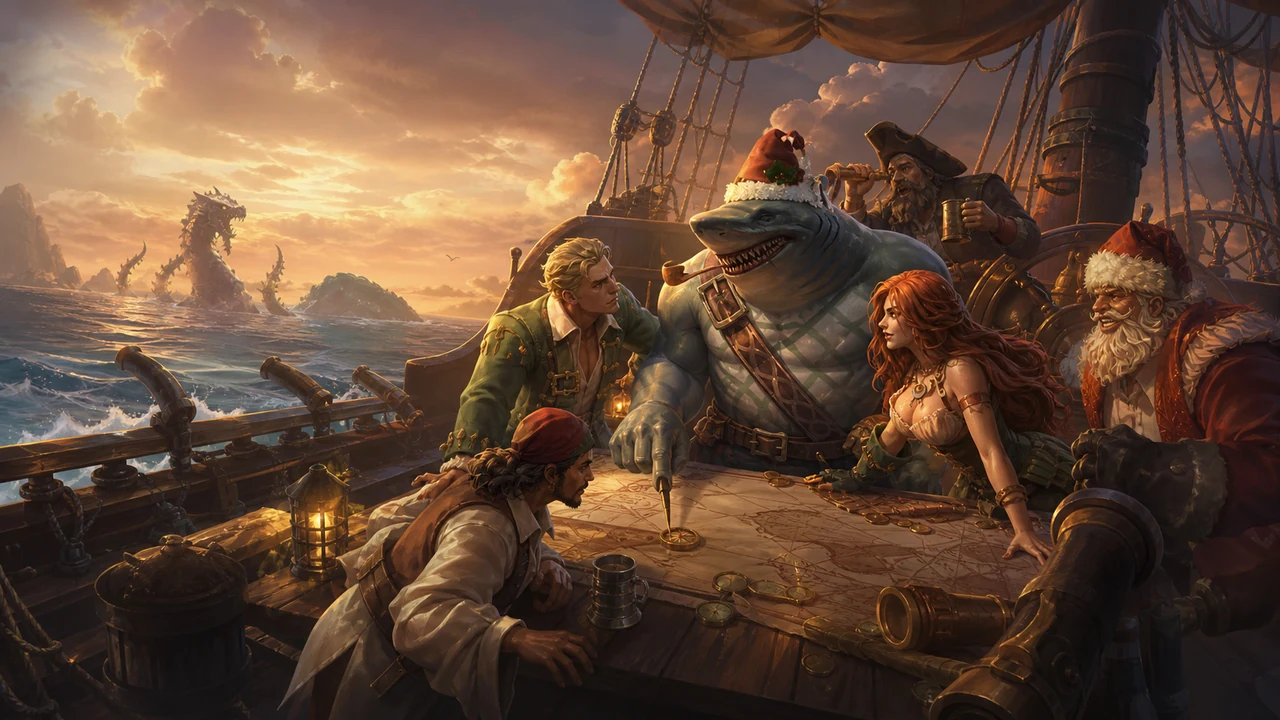
Your ship is both base and identity. Rooms and upgrades improve production, combat and crew functions, while additional ships and heroes create a fleet. That layout makes progress more tangible than a list of buildings on an anonymous field: each improvement appears as part of the vessel carrying you through the world.
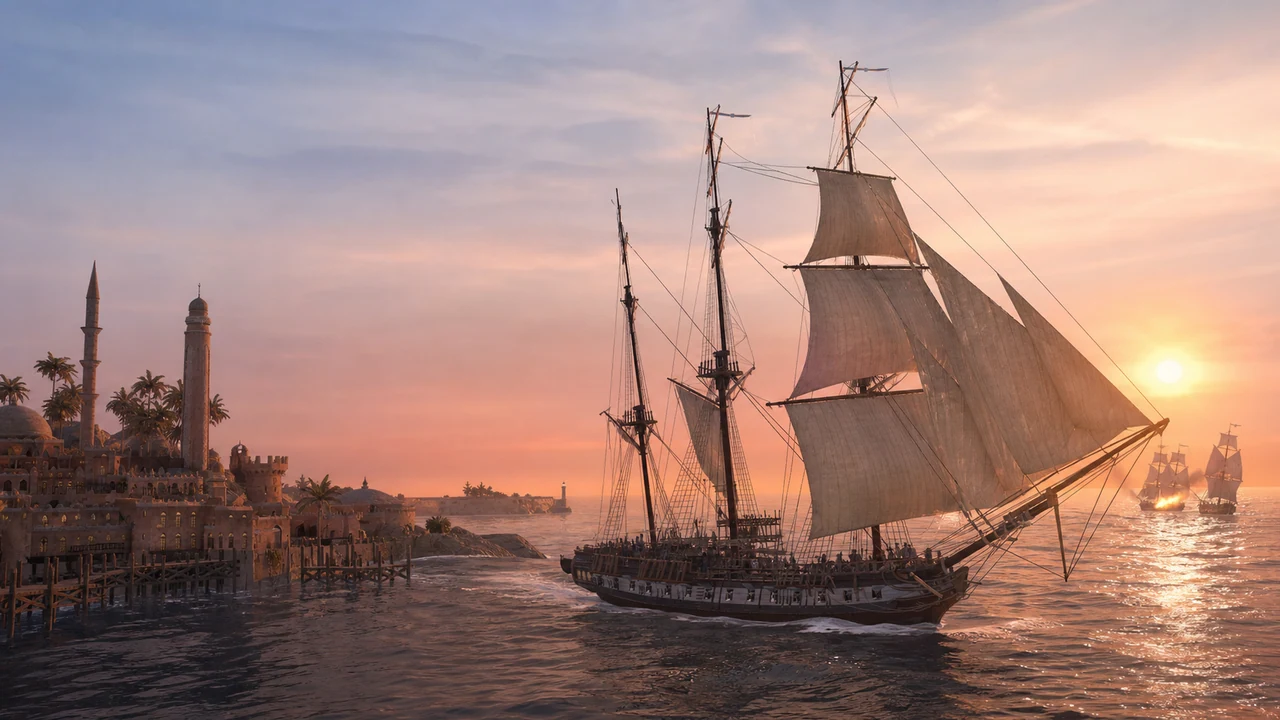
Sailing connects the management systems. The map contains ports, resources, encounters, treasure and sea monsters. Hero Trials and combat activities ask for team composition, while exploration provides the fantasy of being a captain rather than only an administrator.
Is fleet combat strategic?
Strategy begins before an exchange. Hero roles, ship abilities, formation and upgrade priorities determine whether a fleet can absorb pressure or focus damage. The system is readable enough for short sessions, though raw development eventually weighs heavily.
That is the mobile-strategy tradeoff: a smart lineup can outperform a careless one, but it does not erase large differences in account power. Competitive players must manage resources, events and alliance timing as seriously as the actual battle.
Does exploration stay meaningful after the opening hours?
The sea map initially works because movement, discovery and combat point toward the same fantasy. Sailing to a port can reveal a story beat, a resource opportunity or a fight instead of feeling like a loading screen between menus. FunPlus's official game overview frames battles, cabin renovation and gangs as connected pillars. That framing is accurate to the loop, but the balance between them changes as the account matures.
Early exploration delivers new places and systems. Later voyages are more often attached to repeatable targets, alliance plans or resource efficiency. The map still matters because position and travel time shape decisions, yet discovery naturally becomes less surprising. Players who want to preserve the adventure should avoid reducing every journey to the shortest reward route. Rotate between treasure, monsters, story objectives and cooperative targets rather than clearing whichever icon offers the best immediate power.
The flagship helps maintain continuity. Rooms turn collected materials into visible improvements, and the crew gives repeated routes a sense of ownership. The test is whether the next upgrade changes what the fleet can attempt. If it opens a stronger encounter, supports a new formation or removes a persistent bottleneck, the voyage has purpose. If it only raises a number required by the next nearly identical task, the strategy economy has begun to replace the pirate fantasy.
What should a new captain upgrade first?
Prioritize the flagship rooms and production chains that remove recurring bottlenecks. A decorative or situational improvement is less valuable than storage, resources and combat functions used every day. Keep one reliable fleet together long enough to understand which hero roles and ship abilities actually complement each other; spreading experience across every new pull produces several weak formations instead of one useful one.
Follow the early voyages until the map, ports and alliance systems are open, then slow down. Treasure hunts and sea monsters give better context for the game's identity than racing through prompts. The official Google Play listing discloses in-app purchases and random items, so a new player should treat every limited hero offer as optional until a complete free roster has been tested.
Save speedups for a defined alliance or progression milestone rather than spending them whenever a timer appears. A timer that is mildly inconvenient today may become much more valuable during a coordinated event.
How important are alliances?
Very. Alliances provide protection, shared goals and access to coordinated events. A reliable group can turn a routine resource session into planning for a port or collective target. It also creates obligations: scheduled activity and server politics may decide when the game expects attention.
Players who want a persistent naval world with direct sailing and a player-driven economy should compare our World of Sea Battle review. For land-based alliance competition, see our Rise of Kingdoms review.
How aggressive is monetization?
Progress uses construction or research time, materials, hero development and event rewards. Paid acceleration shortens several of those waits, so competition can transform convenience into advantage. Random-item and in-app purchase disclosures should be treated as part of the core model, not a cosmetic footnote.
A relaxed player should choose personal goals, join an alliance that matches their schedule and avoid spending to keep pace with the strongest account on a new server. That race has no natural finish line.
How should random rewards and bundles be judged?
Begin with the outcome, not the discount label. A bundle is only useful when it completes an upgrade already chosen in the weekly plan. Materials spread across unrelated systems can look generous while leaving every important target unfinished. Speedups have clearer value, but spending them immediately often converts money into a few hours of rank that will be overtaken by the next construction tier.
Random hero or item acquisition needs a stricter rule. The store disclosure confirms that random items exist; it does not guarantee a specific hero, duplicate or upgrade material at a predictable cost. Read the live probability and guarantee information before every purchase because event terms can change. If the desired result cannot be priced in advance, treat the entire budget as entertainment money that may produce no useful upgrade.
Alliance culture is another cost multiplier. A group that expects every member to buy into a server race can make an otherwise optional offer feel mandatory. Ask about participation rules before joining and leave if spending is treated as a condition of belonging. Sea of Conquest is at its best when coordination creates stories on the map, not when social pressure turns the shop into an entry fee.
How much time does Sea of Conquest require?
Short sessions can collect production, dispatch fleets and contribute to an alliance. Competitive play asks for more because map targets, limited events and coordinated action happen on a schedule. The game can therefore be either a pleasant fleet routine or a demanding second calendar, depending on the alliance and ranking target.
Choose a group that publishes realistic expectations. A casual alliance that communicates is more useful than a powerful one whose mandatory windows cannot be met. Disable low-value notifications, keep shields and travel risk in mind, and do not let sunk time force continued play after the fleet loop stops being enjoyable.
The most reliable progress plan is weekly rather than hourly: identify one flagship room, one hero role and one alliance objective, then direct resources toward those three outcomes. This prevents a temporary event from draining materials needed for the permanent fleet. It also makes the value of any paid pack easier to judge, because the purchase must serve an existing plan instead of creating a new one.
Is Sea of Conquest worth playing in 2026?
Yes as a social pirate strategy game, not as a fair competitive sport. The ship presentation, colorful crew and sea activities give the early and middle game several overlapping goals. If upgrading the fleet and helping an alliance matter more to you than ranking first, the free route can remain viable. If falling behind turns every timer into pressure, the same economy will quickly overpower the adventure.
Frequently asked questions
Is Sea of Conquest free to play?
Yes, with optional purchases, random-item systems and paid acceleration. Free access is generous enough to judge the fleet loop, but it does not guarantee equal competitive speed.
Is Sea of Conquest a direct-control naval simulator?
No. It is a mobile strategy RPG with fleet preparation, heroes, abilities and real-time exchanges. Players seeking manual sail and cannon control should consider World of Sea Battle instead.
Do alliances matter?
Yes. They provide shared objectives, protection and coordination. An alliance's schedule and spending culture strongly influence how demanding the game feels.
Can Sea of Conquest be enjoyed casually?
Yes, if personal fleet and exploration goals matter more than server rank. Casual play becomes difficult when the player treats every limited event as mandatory.
Is spending required to progress?
No for basic progression, but purchases can shorten timers and accelerate hero or fleet development. Define a budget and purpose before buying anything.
Review strengths and limitations
Pros
A colorful pirate setting gives familiar mobile strategy systems personality
Ship rooms, heroes and fleet formations provide several planning layers
Sailing, treasure routes and sea monsters break up base management
Alliances create coordination and shared objectives
Cons
Competitive progress is tied to timers, resources and paid acceleration
Hero acquisition and upgrade layers introduce randomness
New-server races can make relaxed play feel permanently behind
Routine tasks eventually replace some of the early exploration novelty