Rise of Kingdoms review 2026: strategy or pay-to-win?

A current verdict on Rise of Kingdoms' real-time map, civilizations, commanders, alliances, long progression and spending pressure.

Research-based assessment using the sources listed below. This is not a hands-on test and carries no numeric score. Our review method.

Verdict

Rise of Kingdoms remains compelling for highly active players who want real-time troop movement, alliance politics and months of account planning. It is a poor fit for solo players or anyone expecting competitive power to be insulated from spending, time zones and kingdom leadership.

All Rise of Kingdoms coverage →
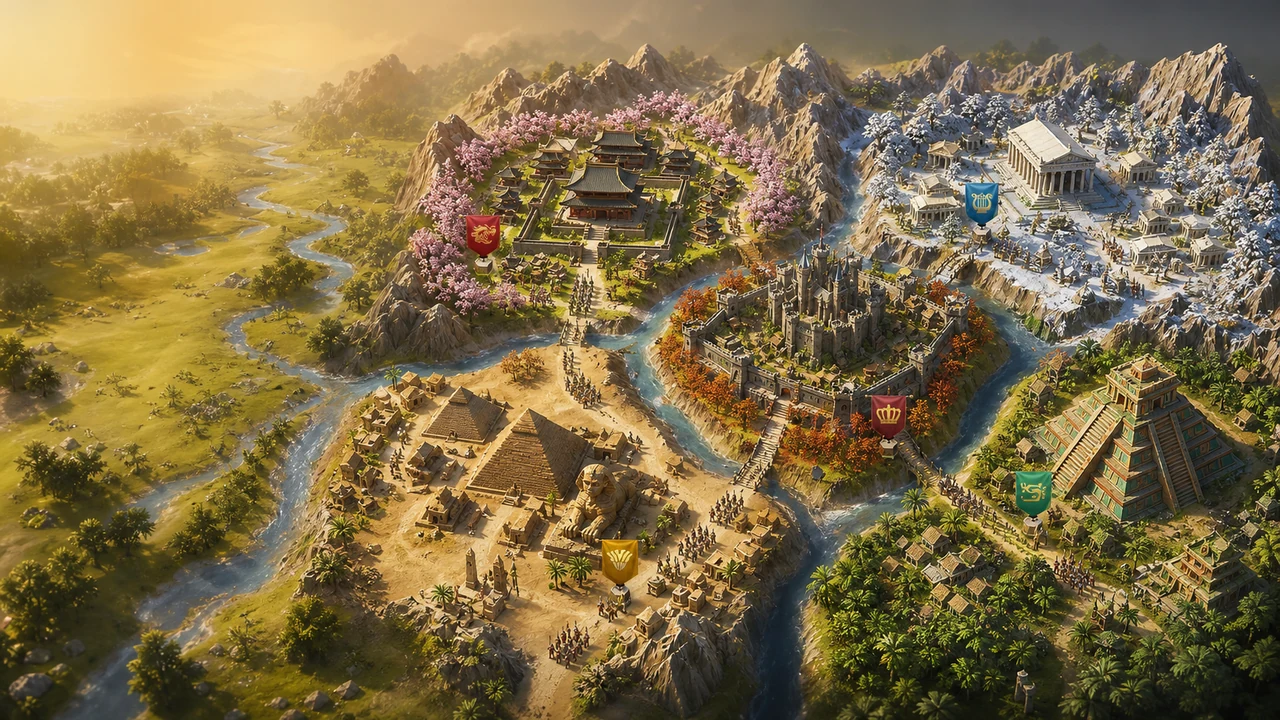
A tabletop-like map of distinct Rise of Kingdoms civilizations connected by rivers around a central fortress.

The short answer: Rise of Kingdoms is worth starting in 2026 only if you want a social, persistent strategy game rather than a fair standalone RTS match. Lilith's official game site presents the real-time map, troop movement, civilizations and alliance wars that create genuine strategic decisions. The same systems also reward time, organization and spending over months. A casual player can enjoy city growth and PvE, but cannot assume that competitive power is separated from wallet size.

This documentary assessment uses Lilith Games' current official site and storefront descriptions checked on August 31, 2026. Kingdom-wide spending patterns and late-game account performance remain outside those sources.


What kind of strategy game is Rise of Kingdoms?

Official commander guide // April 2024Sun Tzu: an example of the commander system

The official Rise of Kingdoms channel published this short Sun Tzu guide in April 2024. It illustrates the commander system; the values shown are not a verified 2026 build recommendation.

Watch on the official channel

Rise of Kingdoms is a persistent 4X strategy game where you select a civilization, develop a city, research technology, train troops, collect historical commanders and move armies across a shared world map. Battles happen on that map rather than behind a separate loading screen.

Troops can receive new orders while moving. A march sent to gather resources can be redirected, an ally can be reinforced and several commanders can operate at once. Rivers, mountains and passes give geography strategic value instead of turning the kingdom into a flat list of targets.

The account never resets into an equal thirty-minute match. City power, commanders, technology, resources and alliance position accumulate. That persistence is the appeal and the source of most imbalance.

Does the real-time map create meaningful tactics?

Yes, especially at alliance scale. March paths, reinforcements, rallies, retreats and control of passes matter because armies exist visibly in the same space. An order can change after launch, so players respond to information rather than merely waiting for a timer to resolve.

The map also connects economic and military decisions. Gathering outside the city exposes marches; territory determines access; alliance structures create forward positions. Even a lower-power account can contribute by filling rallies, gathering efficiently or following coordinated movement.

Tactics do not erase statistics. Commander strength, troop tier, technology and healing capacity affect what an army can survive. A clever movement can avoid a bad fight, but it does not make equal a battle between accounts separated by months of investment.

How important are civilizations and commanders?

The current official Google Play listing advertises 15 civilizations, each with its own architecture, unit and advantages. The starting choice influences early efficiency, but the commander roster becomes the deeper long-term system. Historical figures use skills and talent trees that suit gathering, barbarians, open-field combat, defense or rallies.

Pairs matter more than isolated rarity. A powerful commander built for the wrong role can waste sculptures and experience, while an accessible specialist can remain useful when invested coherently. The game rewards planning a small set of march purposes before upgrading every new name.

This is also where mistakes become costly. High-level skills and equipment require scarce materials, and a half-built collection is weaker than a focused roster. New players should avoid treating every legendary commander as an immediate project.

Are alliances optional?

Not for the full game. Official features include alliance help, live chat with translation, officer roles, map markers, territory, passes, outposts and group achievements. The kingdom's political structure determines access to protection, rewards and major wars.

A good alliance makes the game clearer. Members coordinate events, explain priorities and reduce wasted marches. A poor alliance can turn a hobby into scheduled labor through mandatory activity, constant relocation or leadership conflict.

Choose culture before power. Look for a group whose time zone, activity expectations and communication match yours. Joining the highest-power alliance is not useful if every major event occurs while you are offline or if missing one rally creates pressure.

Is Rise of Kingdoms pay to win?

In competitive terms, spending matters. The game sells in-app purchases and uses long upgrade, commander and resource paths. Money can compress time, expand options and improve recovery. Free players can contribute and progress, but “playable for free” is not the same as equal power at the top of a kingdom.

Alliance design complicates the label. A coordinated group can use every member, and large spenders may generate shared benefits. Strategy and diplomacy still matter because one powerful account cannot occupy every objective alone. Yet spending changes who can lead rallies, absorb losses and rebuild fastest.

The sensible free-to-play goal is usefulness, not individual dominance. Build a small number of effective commanders, keep troops available for group objectives and accept that some opponents should be avoided rather than defeated.

How much time does the game expect?

The opening is generous with visible progress: buildings finish quickly, scouts uncover the map and new commanders arrive often. Later, timers, resources, healing and event schedules stretch the account plan. Competitive kingdom-versus-kingdom play adds coordination windows that may not respect a casual schedule.

This makes Rise of Kingdoms closer to a community commitment than a sequence of independent sessions. Short check-ins can maintain queues and gathering, but major wars reward being present at the right hour.

If you want matches that begin and end without a persistent political layer, our Enlisted review covers a free shooter with much clearer session boundaries. For another alliance-centered long-term account, compare our Star Trek Fleet Command review.

Is the Windows version worth using?

Google Play currently lists the game for Android and Windows, while Lilith maintains an official game site. A larger display and mouse make city, map and commander screens easier to read, especially during multi-march movement.

The Windows client does not turn Rise of Kingdoms into a conventional PC RTS. It carries the same persistent account, economy and event structure. Use the official publisher or storefront route, link the intended account and verify the correct kingdom before assuming progress is missing.

The safest route is whichever official client supports the account you intend to keep. Avoid third-party installers, and do not let a promotional download button decide the platform before its destination and eligibility are clear.

Who should play Rise of Kingdoms in 2026?

Play it if you enjoy long-term optimization, real-time map movement, alliance diplomacy and shared military goals. It is particularly suitable for players who like being one role in a larger organization rather than the sole hero of a campaign.

Avoid it if you want fair-start PvP, a finite single-player campaign or progress that can be paused for months without social consequences. It is also risky for players who respond to competition by spending beyond a fixed budget.

For a character-focused world with more direct action, see our Neverness to Everness review. Its monetization is also layered, but the moment-to-moment goals are very different.

Is Rise of Kingdoms worth starting now?

Yes for the right social player, with strict expectations. Join a new account to learn city growth, troop movement and one commander pair; then evaluate the alliance culture before investing heavily. The game is strongest when planning and cooperation create stories that could not happen in a solo city builder.

Do not start with the goal of catching every veteran or leading every rally. That target turns time and spending into an endless comparison. Start with a useful role, a controlled budget and a kingdom whose schedule fits real life. If the politics and shared map feel exciting, Rise of Kingdoms still has unusual depth in 2026. If they feel like obligations, the later seasons will only make them more demanding.

That distinction is more important than any advertised shortcut or temporary event reward.

Frequently asked questions

Is Rise of Kingdoms free to play?

Yes. City growth, commanders and alliance play are accessible without an entry price, while purchases can accelerate development and improve resource flexibility.

Can Rise of Kingdoms be played solo?

Only in a limited sense. PvE and city tasks work alone, but territory, protection, rewards and major wars are designed around alliances.

Which civilization should a beginner choose?

Choose an early bonus that supports the intended activity, but do not treat the first choice as irreversible identity. Commander focus and alliance fit usually matter more over time.

Does Rise of Kingdoms have a PC version?

Yes through supported official routes, including the current Windows listing. It uses the same persistent strategy structure rather than becoming a separate desktop RTS.

Is Rise of Kingdoms pay to win?

Spending can materially accelerate commanders, troops, resources and recovery in competitive kingdoms. Coordination still matters, but top-end power is not insulated from budget.

Free to play. Standard data rates and in-app purchases apply.

Review strengths and limitations

Pros

  • Troops move and can receive new orders directly on a seamless world map
  • Civilizations and historical commanders support varied account plans
  • Alliance territory, passes and group warfare create meaningful coordination
  • The same persistent strategy account is available on mobile and Windows

Cons

  • Spending can accelerate power, commanders, resources and recovery
  • Competitive kingdoms expect frequent activity and scheduled coordination
  • Commander investment mistakes are expensive and slow to reverse
  • Solo play misses much of the territory, reward and protection structure