NTE review // 2026

Neverness to Everness review 2026: is NTE worth playing?

A source-checked look at NTE's supernatural city, action combat, driving, housing, character acquisition and demanding PC requirements.

Research-based assessment using the sources listed below. This is not a hands-on test and carries no numeric score. Our review method.

Verdict

NTE is worth exploring for players who want a stylish, activity-rich anime city rather than a wilderness checklist. Its breadth is also the risk: demanding hardware, several progression layers and aggressive collectible systems can turn urban freedom into another recurring live-service routine.

All Neverness to Everness coverage →
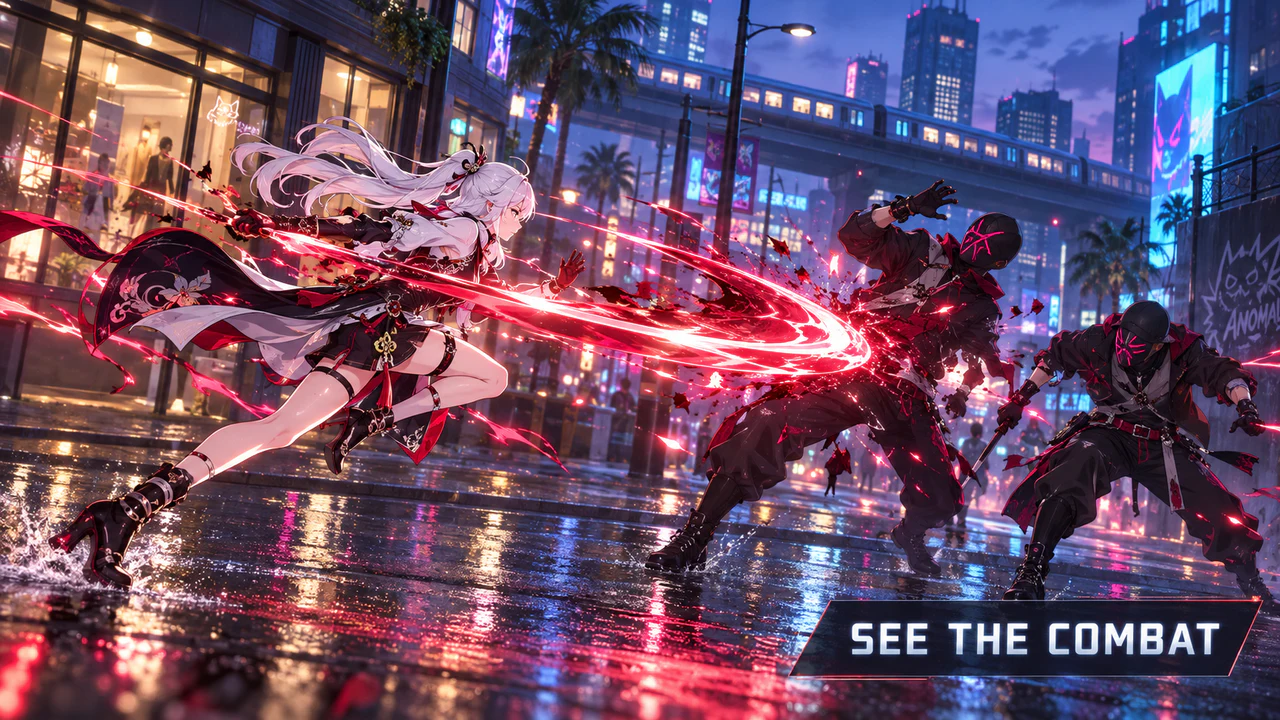
Original illustration of an NTE fighter battling two enemies on a neon city street, with the words See the Combat.

A white-haired fighter faces two enemies on a neon-lit city street.

The review in three beats

01The premise

An urban open-world RPG built around supernatural cases.

02The hook

A dense city, real-time team combat, driving and housing.

03The catch

Gacha pressure and launch friction remain part of the deal.

The short answer: Neverness to Everness is worth trying if the idea of a supernatural anime city is more appealing than another open wilderness. Perfect World Games' official launch notice frames Hethereau around combat, anomaly investigations, driving, property ownership, character interactions and leisure activities in one urban setting. NTE's strength is that the city feels like the product, not merely a backdrop. Its weakness is the number of systems asking to become part of a regular live-service routine.

This documentary assessment uses Perfect World Games' launch, platform and update documentation checked on August 31, 2026. Device-specific performance and complete account-level spending remain outside those sources. Our NTE PC setup checklist covers current clients, storage and account setup separately.

What kind of game is Neverness to Everness?

Official NTE version 1.3 close-up artwork of a white-haired character behind a red blade.

A white-haired character peers past a glowing red blade.

NTE is a supernatural open-world action RPG set in Hethereau. You join Eibon Antique Shop as an unlicensed Anomaly Hunter and investigate urban incidents with a roster of character-based combatants. The city also supports driving, races, housing, décor, shops and social interactions.

That urban density is its clearest difference from games built around large natural regions. Roads, districts, businesses and apartments give ordinary travel a recognizable structure. A mission can move from a street investigation into combat, then into a vehicle or property activity without pretending these systems belong to separate games.

The risk is breadth without priority. When combat, story, collection, driving and housing all compete for attention, a player can spend a session maintaining systems rather than pursuing one memorable objective.

Is Hethereau a convincing open world?

The official material divides Hethereau into districts with distinct identities, from historic Bridge Crossings to corporate New Herland. Cars are not just fast-travel props, and properties are not only static menus. The official Version 1.2 patch notes document more vehicles, races, residences, décor blueprints, fishkeeping and city interactions.

That makes NTE especially attractive to players who enjoy inhabiting a game world between fights. The best promise of the design is not “anime GTA”; it is a city where supernatural commissions and ordinary leisure share the same geography.

The comparison can still mislead. NTE is structured around character progression, account systems and recurring updates, not a crime sandbox with fully systemic civilian simulation. Treat its city as a dense RPG hub and playground rather than an unrestricted urban simulator.

How do combat and character progression fit together?

Official NTE version 1.3 artwork showing a white-haired character holding a glowing red blade.Official NTE version 1.3 artwork showing a white-haired character holding a glowing red blade.
Official campaign art // Version 1.3

A white-haired character holds a glowing red blade across the foreground in this official Version 1.3 campaign artwork.

Partner image — GameSelecto may earn a commission if you play.

Combat uses a team of collectible characters with individual roles, abilities and upgrade paths. The appeal comes from building interactions between kits and switching priorities according to the encounter. Official updates continue adding combat tutorials and adjusting Anomaly Hunt difficulty, evidence that the action layer remains an active development focus.

As in other character-collection RPGs, roster options affect flexibility. A new character is both a personality and a combat tool, so acquisition pressure can feel stronger than a purely cosmetic store. Limited Boards use dice-like rolls and shared pity rules, while other systems distribute outfits, vehicles and materials.

Players should separate two questions: is the current team enjoyable, and is collecting a specific future character worth money? The first can justify playing; the second should never be treated as required merely because an event is temporary.

How intrusive is NTE's monetization?

NTE uses several monetized surfaces. Official notices describe Limited Boards for featured characters, Mystery Boxes containing vehicles and cosmetics, outfit pricing and permanent property purchases using in-game currencies. Some rewards are earnable; others are designed around premium or mixed-currency participation.

That does not automatically make every activity paywalled, but it does make the economy harder to read. Character power, cosmetics, housing and vehicles can each create a different reason to spend. A player who wants “everything” is accepting an open-ended budget rather than buying a complete game.

The practical rule is to choose one priority. If story and city exploration are the goal, use the roster the game provides and treat cosmetics as optional. If collection is the goal, set a fixed monthly ceiling before opening a limited menu. The game's presentation is built to make several kinds of ownership feel important at once.

Is NTE demanding on PC?

Yes relative to many free-to-play games. The official launch FAQ lists a Core i7-10700-class processor and GTX 1660 or RX 5600-class graphics as the minimum, with substantial temporary storage required during installation. The later Steam FAQ lists 16 GB RAM minimum, 32 GB recommended and 70 GB storage for that client.

Those specifications do not guarantee a particular frame rate. They do signal that Hethereau's density, traffic, effects and streaming workload are not designed as a lightweight browser-style experience. A machine close to minimum should begin with conservative expectations rather than assuming “free-to-play” means low-end friendly.

Cross-platform progress is a real advantage, but only when the same PWG login and regional server are used. The official Steam, Epic and Galaxy Store FAQ explains platform and account routes; America, Europe, Asia and SEA data remain separate. The wrong login provider or server can look like lost progress even when the original character still exists elsewhere.

Do driving and housing add lasting value?

They can, because both systems give Hethereau uses beyond combat. Driving turns district layout into something the player learns through repeated routes, while housing provides a reason to care about shops, décor rewards and quiet time between commissions. The Version 1.2 additions matter when a new vehicle handles differently, a race teaches the city's roads or a residence becomes a recognizable base of operations.

The danger is collection without function. Another car, blueprint or decorative object can become one more limited item to acquire rather than a new way to inhabit the city. Before spending or grinding, ask whether the reward changes a route, supports a property idea or enables an activity that will still be used after the event. If the answer is only completion percentage, the system is serving the live-service calendar more than the urban RPG.

Housing is also a useful test of NTE's breadth. A player who enjoys arranging a space, visiting districts for materials and returning after an anomaly mission will experience the city as a connected world. A player interested only in combat may see the same features as menus standing between encounters. Neither response is wrong, but the distinction should guide which rewards and updates deserve attention.

Who is NTE for?

NTE suits players who value place, style and variety. If a session can happily alternate between an anomaly mission, a drive across town and arranging a property, Hethereau has more to offer than an open world built only around enemy camps. It also suits players who want to continue the same account across PC, PS5 and mobile.

It is less suitable for players who want a focused linear campaign, minimal menus or a collection system without limited rotations. Hardware is another filter: the PC version expects a reasonably modern system and a large installation footprint.

For a more systems-heavy factory RPG, read our Arknights: Endfield review. If you want short competitive matches instead of an open world, our Enlisted review is the sharper contrast.

Is Neverness to Everness worth starting in 2026?

Yes, if you start with the city rather than the collection. Explore enough of Hethereau to decide whether its districts, driving and anomaly stories create a place you want to revisit. Do not judge the game by the number of reward icons collected during the first evening.

The strongest version of NTE is a supernatural urban RPG whose optional activities make the city more believable. The weakest version is a list of boards, boxes and upgrade tasks wearing an attractive skyline. Players who can keep the first experience in charge of the second will find a distinctive world. Players who feel compelled to complete every limited system should approach cautiously, because the 2026 update cadence already shows how many new reasons to log in can accumulate.

Frequently asked questions

Is Neverness to Everness free to play?

Yes. The client and core city content are free, with limited character boards, cosmetics and other live-service purchases providing monetization.

Does NTE support cross-platform progress?

Yes across supported platforms when the correct PWG account, login method and regional server are used. Regional data separation means setup deserves care.

Is NTE an anime version of GTA?

That comparison is incomplete. It has driving and an open city, but its structure is a character-collection action RPG with anomaly missions, progression systems and recurring updates.

Can NTE run on a low-end PC?

Its official baseline is relatively demanding for a free RPG. Check the current client requirements and storage needs; this review does not claim a benchmark for hardware near minimum.

Is Neverness to Everness pay to win?

Character acquisition affects combat flexibility, while many city and story activities remain accessible without owning every release. Competitive and collection goals determine how strongly spending is felt.

Free to play. Standard data rates and in-app purchases apply.

Review strengths and limitations

Pros

  • Hethereau gives the open world a dense and recognizable urban identity
  • Combat, driving, housing and side activities create varied session goals
  • Cross-platform progression supports PC, console and mobile play
  • Post-launch updates have expanded social, housing and city activities

Cons

  • The official PC baseline and storage requirement are relatively demanding
  • Limited boards, mystery boxes and cosmetic shops create layered monetization
  • Separate servers and login methods make account setup easy to mishandle
  • So many activities can weaken the pace of the main anomaly-hunting story