RAID: Shadow Legends review 2026: deep roster, heavy grind
A current review of RAID's champion roster, turn-based team building, gear optimization, cross-platform play and aggressive progression economy.
EReview byEthanPublishedReading time8 minAs of official game, cross-platform and 2026 news sources checked August 31, 2026
Research-based assessment using the sources listed below. This is not a hands-on test and carries no numeric score. Our review method.
Verdict
RAID is a polished team-building RPG for players who enjoy long optimization projects, auto-farming and a huge roster. It is a poor fit for anyone sensitive to sales prompts, random acquisition or progression systems designed to consume months rather than weeks.
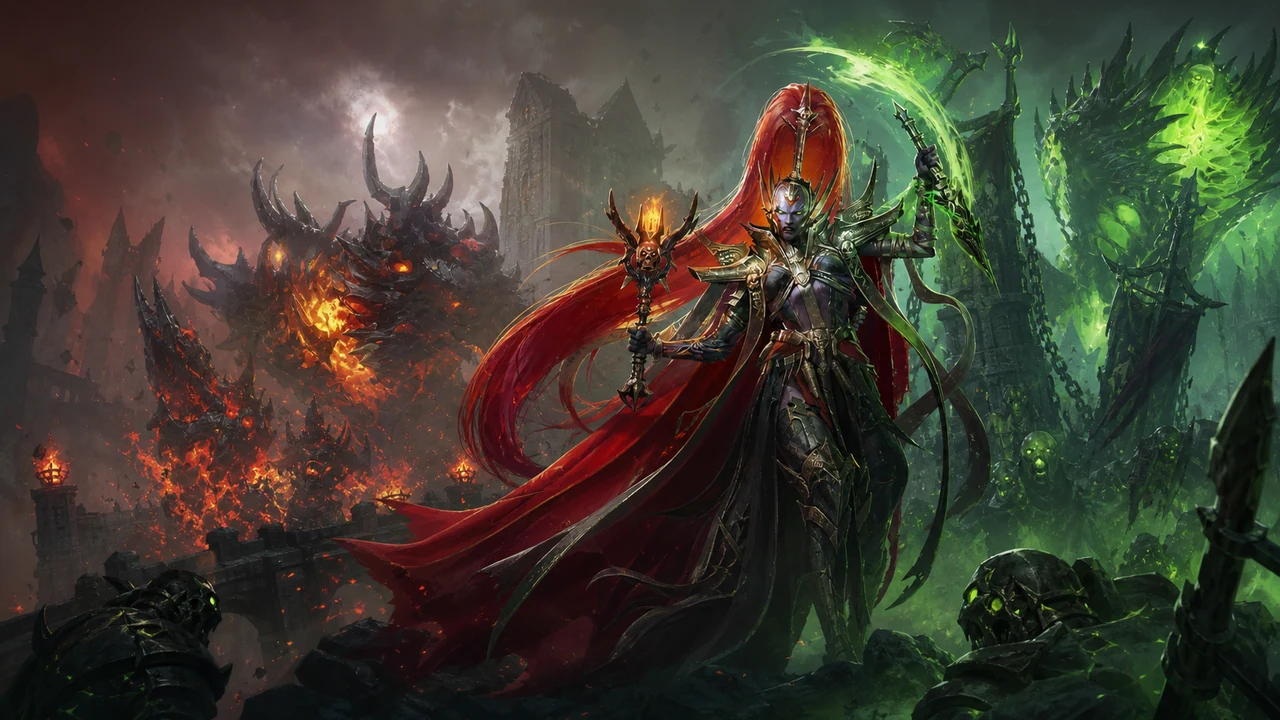
The short answer: RAID: Shadow Legends is worth considering in 2026 if you enjoy building a collection slowly, solving team requirements and letting optimized battles run repeatedly. Plarium's official game page advertises more than 900 champions across 15 factions and numerous PvE and PvP modes. That variety is real, but it sits inside one of the most commercially assertive progression systems in mobile RPGs.
This documentary assessment uses Plarium's official game and news material. A newly completed endgame account and controlled free-versus-paid spending comparison remain outside those sources.
What do you actually do in RAID?
RAID is a turn-based party RPG where most decisions happen before battle. Champions have roles, affinities, cooldowns and status effects. Gear sets and individual statistics change whether a debuff lands, a support acts before an attacker or a damage dealer survives long enough to take a turn.
Campaign stages teach the basics, while dungeons, clan bosses, faction-specific content, arenas and rotating encounters ask for different solutions. The roster is large because no single five-character team solves everything. A champion that looks mediocre in the campaign may be valuable when a boss needs poison, turn-meter control or a specific defensive buff.
Combat can be played manually, but repetition encourages auto mode. The strategic work is often tuning a team until it completes a stage reliably, then using that reliability to fund the next project.
Is the team-building genuinely deep?
Yes. Speed order, accuracy, resistance, skill priorities and cooldown alignment can decide an encounter before raw power does. Restrictions also create useful puzzles: faction content forces neglected champions into consideration, and boss mechanics reward narrow tools.
That depth comes with a large information burden. Gear has many random variables, upgrades consume resources, and a new champion may need levels, ranks, ascension, skills and equipment before its value is visible. External planning tools become tempting because the game explains the pieces better than the optimal relationships between them.
Why does gear matter more than collection size?
A champion's kit defines what it can do; gear determines whether it does that job at the right time and with enough reliability. A debuffer needs accuracy to land effects, a support needs speed to act before the damage dealer, and a boss team may need a precise order that survives many automated turns. Adding another rare champion does not repair a roster whose essential skills miss or activate in the wrong sequence.
Set construction is therefore a means, not the objective. Completing a named set with weak statistics can be worse than combining unmatched pieces that reach the required speed, accuracy or survivability. New accounts should use the fitting and filtering tools to compare outcomes, upgrade promising pieces in stages and stop before poor substat rolls consume all available silver. Gear removal costs also make constant experimentation expensive, so plan the destination before stripping a working team.
Randomness creates the long tail. A dungeon may drop the correct set, slot and main statistic but still produce unusable substats. That does not mean every near miss deserves further upgrades. Define a minimum standard appropriate to the account's current level, sell items that cannot reach it and tighten the standard only after existing teams clear their targets reliably.
This is where RAID's strategic depth is clearest. A champion already owned can become the solution because one faster piece changes an entire rotation. Players who enjoy that incremental puzzle will find depth beyond summoning. Players who want each new drop to be an obvious upgrade will find the same system wasteful and opaque.
What should a new RAID account build first?
The first priority is a campaign farmer who can clear repeatable stages reliably, because food champions and silver fund almost every later project. Raise one starter to the highest practical rank before distributing resources across several exciting pulls. A support who brings defense down, healing, speed or turn-meter control usually adds more account value than a second unfinished damage dealer.
Do not consume rare or epic champions as rank-up material until their faction, fusion and boss uses are understood. RAID's roster is broad enough that an unremarkable early pull can later solve a restricted room. Use common and uncommon champions as deliberate food, lock anything with a specialized skill and keep enough silver to move gear when a better owner appears.
Clan Boss is an important medium-term target because reliable daily participation creates recurring rewards. Speed order, survivability and debuff uptime matter more than one impressive critical hit. The official news forum should be checked before committing resources to a time-limited fusion or balance-sensitive plan.
How aggressive is RAID's monetization?
Very. Random champion summons, energy, upgrade resources, event ladders and limited opportunities overlap. Pop-ups and bundles make the store difficult to ignore even when spending is unnecessary for basic PvE progress.
A disciplined free player can build strong teams, but not on demand. Random acquisition changes which strategies are available, and event milestones may be calibrated around stockpiled resources or purchases. The correct early strategy is to improve a small core, save premium resources for clearly valuable events and stop treating every notification as an objective.
Is RAID better on PC or mobile?
The battles and account are the same kind of progression project on either platform. Mobile is convenient for brief claims and energy use; PC makes long gear sessions, roster sorting and repeat farming easier to supervise. Plarium's cross-platform overview explains the shared-account approach, while its support documentation remains the place to confirm current login rules.
Neither platform fixes the core time demand. Auto battle reduces input but not the number of systems asking for energy, keys, tokens or attention. Players should decide which daily activities serve a current team and skip the rest. Automation is helpful only when it protects time rather than normalizing a schedule the player no longer enjoys.
For another roster RPG where shooting replaces turn-based combat, read our NIKKE review. If alliance-scale strategy is more appealing, our Rise of Kingdoms review covers a different kind of long-term account.
Which activities can a focused account safely skip?
Skip any event whose reward does not advance the current team and whose milestone would consume resources reserved for a clearer goal. RAID presents many simultaneous reasons to summon, level, equip or farm. Their overlap is intentional: participating everywhere prevents stockpiling and makes a paid shortcut look useful. A focused account chooses one major objective, such as a Clan Boss tier or a dungeon stage, and treats unrelated leaderboards as background.
Arena attempts, faction keys and energy all have theoretical value, but using every resource every day is not a healthy requirement. Complete the activities that provide scarce materials needed now, automate a reliable farm only while it serves a defined upgrade and stop when the session becomes pure box-ticking. An expired key is cheaper than continuing a routine the player no longer enjoys.
Time-limited fusions require the most caution. Check the official schedule and calculate whether the account already holds the energy, shards, silver and play windows needed. Starting because the first milestones look easy can create pressure to spend near the end. If the full plan is not realistic before the event begins, saving resources for a future target is a successful decision, not a failed event.
Who should play RAID in 2026?
Play if spreadsheets, gear rolls and incremental account improvement sound satisfying. Cross-platform access is useful for players who want mobile check-ins and longer PC management sessions.
Skip it if you want a finite RPG, immediate access to a planned team or minimal sales pressure. RAID can be played without paying, but it cannot be separated from systems designed to make waiting and randomness commercially valuable.
Is RAID: Shadow Legends worth it?
It can be, when approached as a slow optimization hobby. The art, roster and encounter variety support years of projects. Set a spending rule before the first attractive bundle, choose one progression target at a time, and judge success by teams solved rather than champions owned. Without those boundaries, the store and event calendar can consume the strategic game underneath them.
Frequently asked questions
Is RAID: Shadow Legends free to play?
Yes, but progression includes random summons, energy and many purchasable shortcuts. Free success is possible with patience and planning, not guaranteed access to a chosen champion.
Does RAID support cross-platform progress?
Yes through the official Plarium account system. Follow the current linking instructions before starting separate accounts on different devices.
Is manual combat important?
Yes for learning encounters and correcting skill timing. Efficient teams eventually automate much content, but automation does not replace composition, speed order or gear decisions.
How much time does RAID need each day?
It can consume hours if every key and event is chased. A focused account can claim essentials, complete one current objective and stop; the game does not enforce a healthy limit for you.
Is RAID suitable for a finite story campaign?
Not really. It has campaign lore, but its main value is continuing roster development and repeatable modes. Players seeking a self-contained ending should choose a conventional RPG.
Free to play. Standard data rates and in-app purchases apply.
Review strengths and limitations
Pros
A very large champion roster supports many team-building experiments
Bosses and faction restrictions give specialized units a reason to exist
Gear, speed tuning and skill order create meaningful optimization depth
Cross-platform support makes the same account practical on PC and mobile
Cons
Summoning and upgrade systems layer several forms of scarcity
Repeated farming is central to gear and champion development
Frequent offers and event targets can overwhelm a new account
Competitive progress strongly favors time, planning and spending