NIKKE review 2026: sharp shooting behind the gacha
A current review of NIKKE's cover shooting, five-character squads, post-apocalyptic story, idle progression, fanservice and random-item economy.
EReview byEthanPublishedReading time8 minAs of official Google Play and verified official trailer sources checked August 31, 2026
Research-based assessment using the sources listed below. This is not a hands-on test and carries no numeric score. Our review method.
Verdict
NIKKE is more tactically interesting and narratively ambitious than its fanservice-first reputation suggests. Cover shooting, Burst sequencing and strong character stories make it worth trying, but random recruitment, idle walls and an overtly sexualized presentation are fundamental parts of the package.
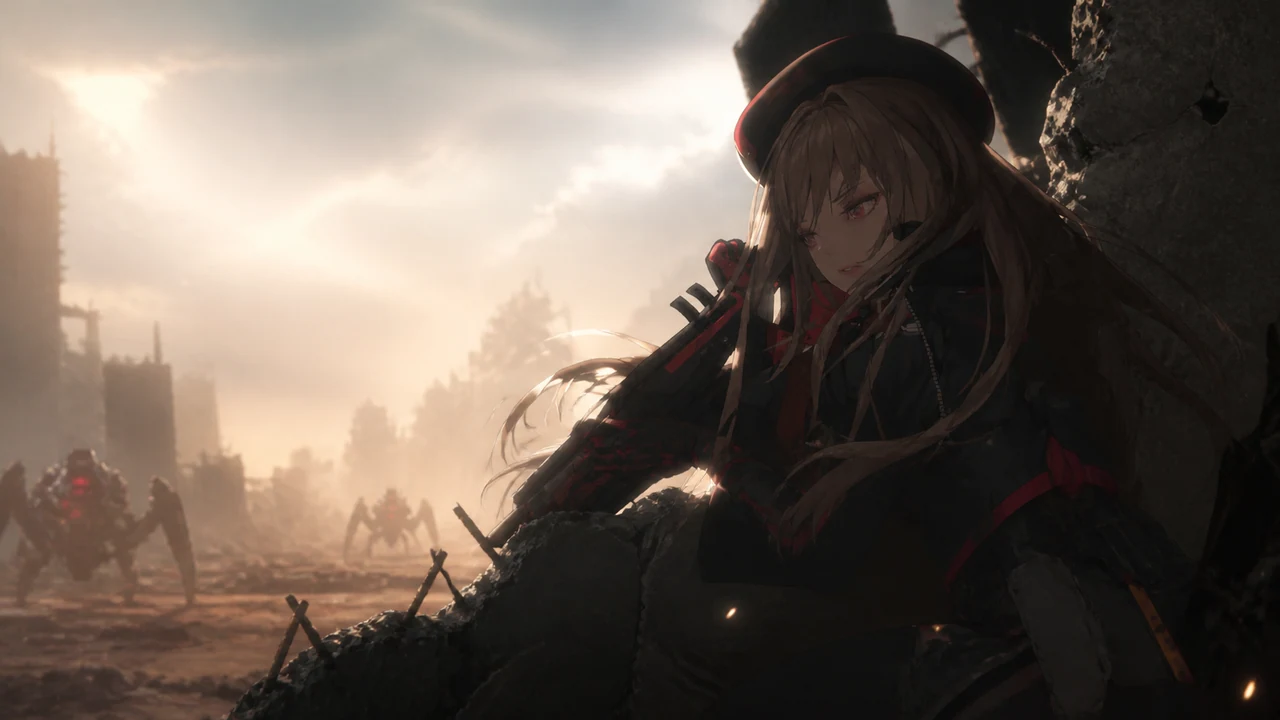
The short answer: NIKKE is worth playing in 2026 if you want a squad RPG where manual shooting matters and you are comfortable with conspicuous fanservice and gacha. The official store listing describes the post-apocalyptic conflict and discloses random-item purchases; battles place five Nikkes behind cover against Raptures while you aim weapons, manage exposure and sequence Burst skills. Beneath the marketing is a surprisingly bleak campaign about humanity's retreat underground, but progress still passes through idle resources and random character acquisition.
This review uses Level Infinite's current official store listing and verified NIKKE trailers. It is not a new full-campaign benchmark or a quantified gacha-spending test.
How does NIKKE actually play?
Each Nikke uses a weapon type with a useful range and firing behavior. During battle you aim one character directly while the squad contributes fire and skills. Cover absorbs pressure until it breaks, and some attacks must be interrupted by targeting specific parts or markers.
The Burst system gives team order strategic weight. Characters occupy stages in a sequence, so a roster of individually strong units can still fail to complete a reliable chain. Cooldowns, healing, attack buffs and boss parts matter as much as the headline damage number.
Auto battle handles routine stages, but manual control is not decorative. Difficult bosses reward holding fire, changing targets and timing a Burst window rather than trusting raw account power.
How should a new player build a first squad?
Start with Burst coverage rather than rarity. A team that can move reliably through Burst I, II and III is more functional than five damage dealers who cannot complete the sequence. Check cooldowns as well as stages: two characters may share a Burst type but leave a gap if both cooldowns are too long. Healing, cover repair and defensive support become increasingly valuable when campaign enemies outlive the first damage window.
Weapon range matters. Shotguns prefer close targets, sniper rifles and launchers can reach distant parts, while assault rifles and machine guns offer steadier general use. The official gameplay trailer illustrates the cover-and-aim structure, but a trailer cannot tell you whether a specific roster will clear a current boss. Use the in-game skill descriptions and shooting range before investing scarce manuals or duplicate-based upgrades.
Build one campaign team first, then preserve specialists for bosses and tribe restrictions. Account guides that assume every limited unit can make a reasonable roster look inadequate. NIKKE is healthier when new characters expand options rather than invalidate a team that already functions.
Is the story really a reason to play?
Yes. The Ark's survivors depend on humanoid weapons while denying them equal status, giving the campaign a conflict more uncomfortable than its bright character art suggests. Main chapters alternate battlefield losses, political pressure and personal stories. Fully voiced events often give individual Nikkes space beyond their combat role.
The contrast is intentional but not always graceful. Serious scenes can sit beside overt fanservice and sales-driven character releases. Players who cannot accept that presentation are unlikely to be won over by the writing alone.
What separates boss combat from campaign power walls?
Campaign stages often test whether the account has reached a required baseline. Enemy defense, time limits and the game's power comparison can make a squad feel abruptly weaker even when the same Burst order worked one chapter earlier. Waiting for Outpost materials is sometimes the efficient answer, but it should not be the first answer. Check whether the team is attacking the correct range, completing a full Burst consistently and protecting the character whose death breaks the sequence.
Bosses provide a better test of NIKKE's active systems. Destructible parts, interruption circles and telegraphed attacks create decisions that automation can mishandle. A player may need to hold a Burst for a dangerous phase, move aim between parts or stop firing so cover is available when a screen-wide attack lands. The official combat presentation shows the basic cover rhythm, but the value of manual play becomes clearest when a failed attempt can be traced to one readable choice.
This difference matters when assessing progression. A campaign wall that disappears after two days of resources is an idle gate. A boss that falls after changing targeting, Burst timing or support coverage is a strategy problem. NIKKE contains both, and players should avoid confusing one with the other. Upgrade only after testing the mechanical explanation; otherwise scarce materials can hide a fix that would have improved the squad in every later encounter.
How restrictive are idle progression and gacha?
Outpost rewards accumulate with time, turning waiting into a core source of upgrade materials. That makes NIKKE easy to maintain in short sessions, but it also creates campaign walls where better tactics cannot fully replace account power.
Recruitment includes random items, as the official store disclosure states. Limited banners and duplicates shape roster development. A cautious player should prioritize a complete Burst chain, use flexible supports and avoid assuming every new damage dealer is required.
The official listing supports Android and Windows. A larger landscape display and mouse aiming suit precise weak-point targeting, while mobile remains convenient for resource collection and short event stages. Use the official account route and confirm regional availability before moving between platforms.
How much daily time does NIKKE ask for?
Routine maintenance can be short because Outpost resources accumulate while you are away and many repeat battles support automation. The pressure comes from overlapping activities: simulation rooms, interception, tribe towers, events and limited objectives can make a nominally idle game feel busy. A practical session claims resources, spends the highest-value attempts and stops before low-value checklists turn into obligation.
Story chapters are better approached in longer blocks because dialogue and set pieces lose impact when reduced to reward taps. The contrast between the official character presentation and the campaign's darker themes is part of NIKKE's identity, not a temporary early-game quirk. Players sensitive to its sexualized art direction should evaluate that presentation before investing time or money.
How should limited events be approached?
Events are valuable when they add a compact story, provide efficient materials and let less prominent characters take focus. They become exhausting when every shop item, challenge stage and login reward is treated as mandatory. Read the event duration, identify the currency source and choose the rewards that solve a current account bottleneck. Clearing the story and buying high-value manuals or upgrade resources is a complete event plan; emptying every low-priority item is optional.
Character releases need a separate decision. Narrative affection is a valid reason to save, but it is not evidence that the unit improves the account. Use trial content to judge aiming feel, Burst placement and team requirements. Then check whether the roster already covers the same role. A new damage dealer may be exciting while a durable Burst I or II support would make more existing teams function.
Do not use duplicate copies as the default definition of completion. Additional copies can increase stats and progression, yet the first copy is the point at which a character's actual kit becomes available. Decide the maximum number of pulls before starting and stop at that limit even if the result is disappointing. NIKKE's events are most enjoyable when they expand the campaign's world; they are least enjoyable when a temporary banner turns a story episode into a spending deadline.
Who should play NIKKE in 2026?
Play if you enjoy team construction, boss mechanics and character stories delivered in manageable sessions. Skip it if random acquisition, idle gates or sexualized character direction are deal-breakers.
NIKKE earns a qualified recommendation because manual aiming, Burst sequencing and its campaign give the game substance beyond the collection layer. Build a functional squad before chasing favorites and evaluate it against a boss that requires manual control. If that battle makes the team decisions clear, there is more depth here than the advertisements communicate.
Frequently asked questions
Is NIKKE free to play?
Yes, with optional purchases and random-item recruitment. Story access does not require a paid copy, but a free account cannot obtain every limited character on demand.
Is NIKKE an idle game or a shooter?
It is both. Idle resources advance account power, while manual aiming, target choice, cover and Burst timing materially affect difficult encounters.
Can NIKKE be played on PC?
Yes. The official listing supports Windows as well as Android. Use the official client and account-linking route for your region rather than an unofficial emulator package.
Does NIKKE require duplicate characters?
Duplicates improve characters and account progression, but a first copy can perform its role. The importance of further copies varies by mode and competitive ambition.
Is the story suitable for everyone?
No. It combines war, loss and exploitation with pronounced fanservice. The writing can be affecting, but the presentation is inseparable from the experience and deserves consideration before downloading.
Free to play. Standard data rates and in-app purchases apply.
Review strengths and limitations
Pros
Cover-based shooting gives battles a distinctive manual rhythm
Five-character squads reward Burst order, weapon range and role balance
The post-apocalyptic campaign delivers stronger drama than the marketing implies
Official Windows support suits precise aiming and landscape play
Cons
Random-item recruitment controls access to many team options
Idle resource walls can halt campaign progress abruptly
Fanservice-heavy design will alienate part of the audience
Limited characters and event schedules create recurring collection pressure