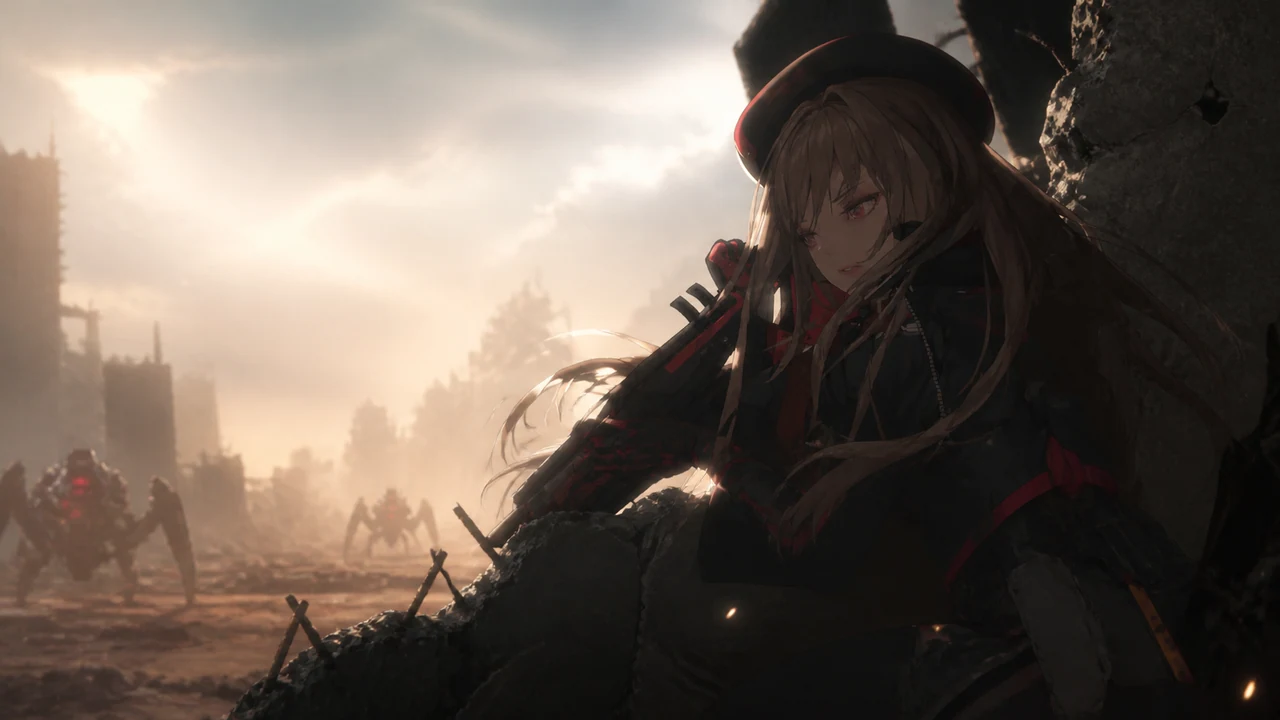
Zenless Zone Zero review 2026: stylish combat, busy routine
A current assessment of Zenless Zone Zero's chain-based combat, urban structure, character stories, gacha progression and Version 3.2 rhythm.
EReview byEthanPublishedReading time8 minAs of Version 3.2 official announcement and current news checked August 31, 2026
Research-based assessment using the sources listed below. This is not a hands-on test and carries no numeric score. Our review method.
Verdict
Zenless Zone Zero fits players who value fast team combat, bold audiovisual direction and compact character stories. It is a weaker fit as a relaxed side game once upgrade materials, rotating activities and limited-agent schedules compete for attention.
The short answer: Zenless Zone Zero is worth playing in 2026 if you want stylish, session-friendly action rather than another enormous open world. HoYoverse's Version 3.2 announcement documents a combat loop built around three-agent swaps, assists, stuns and Chain Attacks. Its weakness is everything that can gather around those fights: currencies, material stages, time-limited agents and a routine that may demand more attention than the compact city suggests.
This assessment uses HoYoverse's current Version 3.2 announcement and official news. It is not presented as a fresh frame-rate test or a complete spending study.
What kind of action game is Zenless Zone Zero?
ZZZ is a character action RPG organized around missions, hubs and combat stages. New Eridu gives you streets, shops and social scenes between assignments, while Hollows provide the hazardous spaces where squads fight. This structure is denser than Genshin Impact: fewer long walks, more deliberate transitions and a stronger sense that each session can contain one specific objective.
Teams revolve around rapid swaps, defensive and evasive assists, anomaly buildup, stuns and Burst-style finishers. A good composition is not just three favorite characters; roles should create an opening, exploit it and maintain pressure. The visual feedback is immediate enough for beginners, but higher-value play comes from knowing when to cancel an animation, trigger an assist or hold a resource for the stun window.
Does the combat stay interesting?
It does when encounters demand the full system. Easy stages can collapse into attractive button sequences, making early criticism about simplicity understandable. Bosses and advanced modes reveal more: enemy tells matter, swap timing matters, and a poorly assembled team spends too long forcing damage through the wrong window.
The best part is how clearly cooperation is communicated. One agent sets up a condition, another enters through an assist, and a third converts the break into damage. Even when the mathematical build is complex, the action on screen tells a readable story.
The risk is repetition. Material stages are designed to be cleared many times, so mastery eventually turns some fights into maintenance. ZZZ needs new enemy patterns and alternative objectives as much as it needs new characters.
How should a new player build a first team?
Start from roles and faction or attribute synergy, not character rarity. A practical team needs a way to create a stun or anomaly window, a character who converts that opening into damage and a support whose buffs actually affect the chosen damage type. Read passive activation conditions; three individually strong agents can lose important bonuses when assembled without a shared condition.
Raise one team's levels, core skills, W-Engines and a limited number of important talents before starting a second expensive project. Drive Discs become a deep optimization layer later, but a correct main statistic and coherent set are enough while basic upgrades remain incomplete. Practice the team's swap order in repeatable content instead of judging it from an isolated damage number.
Bangboo selection should support the team rather than force a weaker composition. The official news hub is the reliable source for current agents and events; unofficial tier lists can become stale immediately after balance, enemy or roster changes.
How demanding is the gacha and daily routine?
Agents and signature equipment are acquired through limited and standard signal searches. As in other HoYoverse games, saving creates predictability, but it does not remove scarcity. The game frequently presents a new character as both a narrative personality and a mechanical solution, which makes skipping feel harder than a purely statistical decision.
A free or low-spending player should build two functional teams slowly, value flexible supports, and avoid treating signature equipment as mandatory. Daily energy is useful for targeted progress, yet missing a day does not invalidate the story or combat already available.
Do the hubs and character stories justify the routine?
New Eridu's smaller spaces give recurring characters somewhere recognizable to live. A shopkeeper, faction member or agent can reappear in an ordinary street scene before becoming important in a mission, connecting the roster to a recurring place. Character episodes expose fears, jobs and relationships that combat animations alone cannot communicate.
Version updates need to protect that local texture. HoYoverse's Version 3.2 Intel Report highlights new story content, event gameplay, outfits and agent releases. The range keeps the live service active, but not every addition carries equal lasting value. A well-written episode or a new enemy pattern can deepen the game after its reward period ends; a checklist event may disappear as soon as its currency is claimed.
That is why the hubs matter. They create continuity between patches and provide low-pressure time with the cast. Players who skip every conversation to reach the next combat stage lose a major part of ZZZ's identity. Players who dislike returning to the same streets may find the focused geography repetitive sooner than they would a broad open world.
How much routine is required each day?
A focused daily session can spend battery charge, complete compact errands and leave. Longer weekly and event activities add variety, but the interface makes it easy to interpret every available reward as an obligation. Set a current upgrade target, run the material stage that serves it and stop when the target is funded.
Limited agents remain the strongest source of urgency. Saving currency makes outcomes more predictable, but it cannot make every simultaneous release affordable. Trial stages and story appearances help evaluate play style; they should not be mistaken for a need to own the character. W-Engines can improve a build, yet flexible lower-rarity options often preserve more currency for a future agent.
This article does not claim a current spending-rate calculation because banner rules and offers must be read in the live client. The durable recommendation is to decide a maximum budget before opening the purchase screen and never spend merely to recover earlier luck.
It suits players who enjoy learning short, expressive combat loops and returning for periodic character stories. The hubs make the cast feel local, the soundtrack and graphic design give the game unusual cohesion, and the mission structure respects shorter sessions better than a continent-sized map.
It is a weaker fit for anyone who wants a finite campaign, dislikes collecting upgrade materials, or feels compelled to own every featured agent. ZZZ is compact in geography, not in live-service systems.
What does account progression ask beyond one strong team?
One coherent squad carries story progression far, but rotating high-level activities eventually reward broader coverage. Different resistances, encounter rules and role requirements can expose an account that invested everything in one damage pattern. The sensible response is not to raise every agent. It is to finish one team, identify the exact limitation of the next challenge, then build the smallest second core that solves it.
Flexible supports and generally useful W-Engines are valuable because they reduce the cost of adapting. Drive Disc farming should come after guaranteed level, skill and core upgrades; chasing a perfect substat while a second team's basic abilities remain unfinished is poor resource use. Trial stages are helpful for learning feel, but they use prepared builds and cannot show the full cost of bringing a new agent into an established account.
This broader progression has a clear purpose when it creates new combat decisions. It becomes costly when a player pulls a character mainly to cover a temporary rule. Review the live mode requirements and the official notices, then decide whether the account needs the character or simply needs a different tactic with existing tools.
Is Zenless Zone Zero worth playing in 2026?
Yes, if the combat is the reason you log in. Try several teams, reach encounters that punish careless swapping and decide whether that rhythm remains satisfying after the spectacle becomes familiar. Version 3.2 shows a confident action RPG with a memorable city and cast. The key is to let the roster serve the combat—not let the banner calendar become the game.
Frequently asked questions
Is Zenless Zone Zero free to play?
Yes. Story, missions and combat are available without an entry price. Limited agents and W-Engines use a gacha economy, so free players must choose targets.
Is Zenless Zone Zero open world?
No. It uses urban hubs and mission-based combat spaces. That structure produces more focused sessions than a continuous continent-sized map.
Does combat require three limited agents?
No. Role coverage, passive conditions and upgrade quality matter more than filling every slot with a limited rarity.
Is a signature W-Engine necessary?
Usually not for story and ordinary progression. Signature equipment can improve a character, but flexible alternatives preserve currency and often perform the role adequately.
Can ZZZ be played casually?
Yes, if story and combat are prioritized over clearing every rotating objective. It becomes demanding when every daily resource and limited banner is treated as mandatory.
Review strengths and limitations
Pros
Fast swaps, assists and chain attacks connect each team member's role
New Eridu has a confident visual and musical identity
Shorter urban spaces keep sessions more focused than a giant open world
Character episodes give the roster personality beyond combat roles
Cons
Routine material farming can flatten the pace between story updates
Limited agents and signature equipment create familiar gacha pressure
Early encounters expose fewer team-building demands than later fights
Multiple event and progression menus accumulate over time