Where Winds Meet review 2026: a vast and generous wuxia RPG
A current assessment of Where Winds Meet's martial-arts combat, historical open world, solo and multiplayer content, expansions and free model.
EReview byEthanPublishedReading time7 minAs of official Hexi, Imperial Palace and Hidden Mountain 2026 sources checked August 31, 2026
Research-based assessment using the sources listed below. This is not a hands-on test and carries no numeric score. Our review method.
Verdict
Where Winds Meet is one of 2026's most appealing free open-world RPGs: beautiful, mechanically broad and unusually generous in playable content. Its enormous collection of systems can feel unfocused, and multiplayer/live-service layers will not suit everyone, but the martial-arts journey is strong enough to justify the learning curve.
The short answer: Where Winds Meet is worth playing in 2026 if you want a free open-world RPG built around wuxia movement, martial-arts weapons and a lavish historical setting. NetEase's official Hexi expansion announcement documents how far the world has expanded beyond its launch regions. That scale is the attraction and the complication: the game can feel like several RPGs, social systems and activity lists occupying the same map.
This review is based on Everstone Studio and NetEase's official 2026 expansion material. It is a source-checked assessment, not a claim that every current campaign and platform build was retested.
What kind of game is Where Winds Meet?
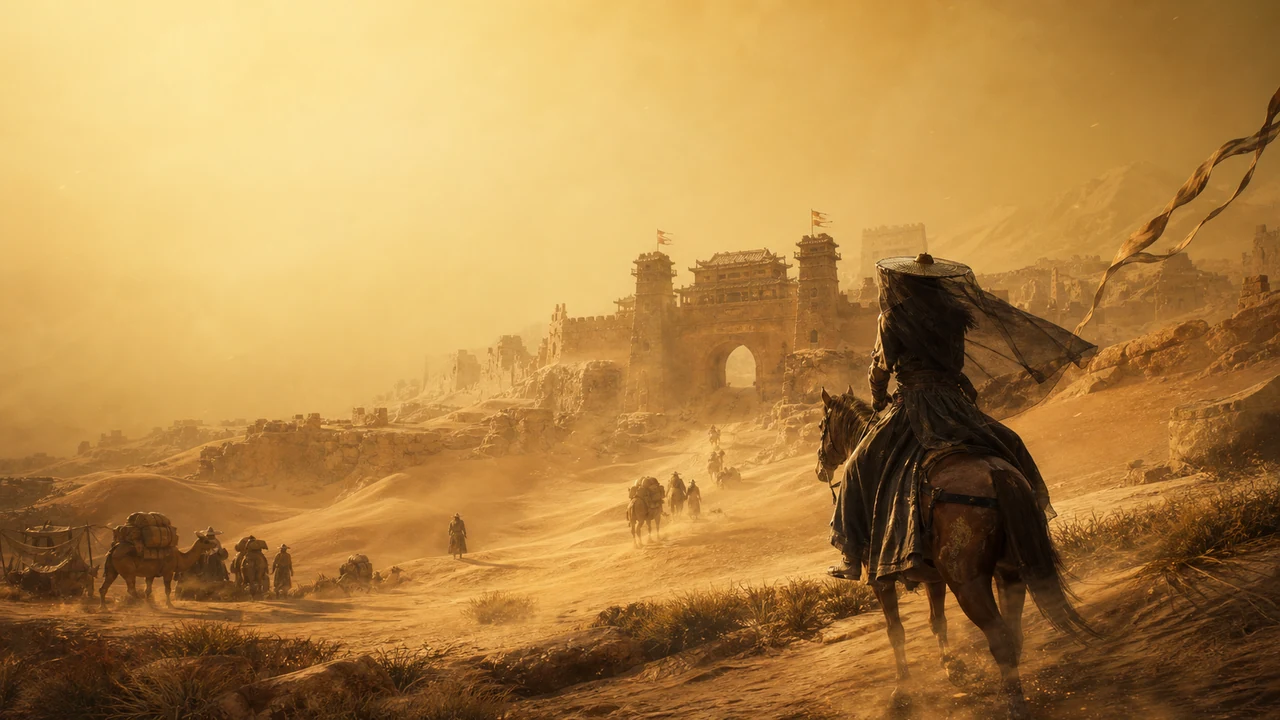
You play a wandering martial artist in 10th-century China, exploring cities and countryside while learning weapons, Mystic Skills and social professions. Combat mixes direct weapon strings, counters, movement and supernatural wuxia techniques. Exploration is equally important: towns contain local stories, the wilderness hides puzzles and bosses, and traversal frequently turns a distant landmark into an invitation.
The world is not rigidly realistic. Historical textures coexist with exaggerated martial arts, eccentric side quests and online activities. That mixture gives Where Winds Meet personality, though players seeking one consistent prestige-drama tone may find it restless.
Does the martial-arts combat have depth?
Yes, because weapons and Mystic Skills change more than animation. A defensive style asks for different timing than a mobile rope-dart or umbrella setup, while counters and boss patterns reward attention. The spectacle is generous, but stronger encounters still punish attacks thrown without regard for position and recovery.
Build variety also creates a learning burden. Weapons, inner ways, skills and equipment layers arrive alongside exploration systems. A new player should improve one dependable setup before collecting every option. Mastering a small kit makes the larger world easier to read.
What should a new wanderer prioritize?
Choose one weapon pairing whose range and defensive options are easy to understand, then invest until normal encounters feel stable. Mystic Skills are exciting to collect, but a smaller set used intentionally is more valuable than a crowded wheel of unpracticed tricks. Learn the timing of parries, evasions and recovery before using level advantages to bypass every early lesson.
Follow the main route until core travel and progression systems are open, then allow side stories to interrupt it. Where Winds Meet is strongest when a village, profession or rumor becomes a destination; clearing icons strictly by region can turn its variety into routine. Keep an eye on recommended level and story prerequisites when entering a later expansion zone.
The official Where Winds Meet news index is the safest place to confirm current events and expansion order. Live-service menus can surface a reward before its narrative context, so new players should not assume the brightest notification is the best next chapter.
How substantial are the 2026 expansions?
The Hexi expansion alone was announced as three major maps spanning desert, snowfields and grasslands, with new stories, bosses and martial arts. Imperial Palace moved the focus back toward court intrigue and urban spaces, while later Hidden Mountain material continued the main route. These are not merely event arenas; they broaden the geography and tone of the adventure.
The risk is that new regions make the existing activity backlog more imposing. Players should follow the main narrative that interests them instead of clearing each map by percentage.
Do professions and side activities deepen the world?
They do when they create a different relationship with a place. A healing, crafting, performance or social activity can make a town feel inhabited rather than built only to distribute combat quests. Rumors and local stories are especially valuable because they turn attention into progression: listening, observing and following an unusual detail becomes as important as defeating the next marked enemy.
The same breadth can become noise. A system introduced with a bright tutorial may never become part of the player's preferred journey, yet its notifications remain visible. Test each profession long enough to understand its purpose, then keep only the ones that support the character fantasy or produce genuinely useful outcomes. A wandering physician, duelist or social performer does not need to master every parallel career simply because the menu records it.
Side activities are also where the game's uneven tone is clearest. Quiet historical detail, broad comedy and supernatural spectacle can appear within one session. Players who enjoy wuxia as a flexible popular tradition may find that lively. Players seeking a consistently solemn drama should prioritize the main route and more grounded local quests instead of assuming every optional activity shares the same tone.
Most importantly, do not let completion rewards decide whether an activity was meaningful. A short encounter that reveals a community or teaches a new technique can be more valuable than an hour spent clearing repeated markers. The open world benefits from choice only when the player is willing to leave some choices unused.
Is the free-to-play model fair?
NetEase positions the game as free-to-play without pay-to-win mechanics, and the core world, story and combat are accessible without buying power. Cosmetics and live-service offers still create commercial pressure, so the claim should be judged continuously rather than treated as a permanent guarantee.
The practical advantage is that you can evaluate a large amount of real content before spending. Do not buy convenience until the underlying combat and exploration have already proven enjoyable.
How do solo and multiplayer fit together?
The world and much of the narrative can be enjoyed as a solo action RPG. Cooperative activities, social professions and competitive modes add other rhythms without making them the only route through the setting. Players who want a private wuxia journey can keep the main story central, while groups can treat bosses and activities as shared projects.
That breadth needs boundaries. A solo player does not have to maintain every social track, and a competitive player should not assume story gear is automatically optimized for PvP. Platform, region and server rules may change as the service expands, so confirm current matchmaking and account details in the client rather than relying on launch-era guidance.
NetEase's Imperial Palace expansion notice illustrates the game's move between frontier exploration and court-focused spaces. That variety is a strength when approached selectively and a source of fatigue when every activity becomes mandatory.
For another NetEase world organized around crafting and scenarios, see our Once Human review. Players who prefer elemental party building can compare our Genshin Impact review.
How should expansion content be paced?
Follow prerequisites and narrative interest, not release chronology alone. Hexi, the Imperial Palace and later regions offer distinct landscapes and themes, but arriving underprepared can turn their strongest encounters into gear checks. Finish the combat fundamentals and story context needed for the next destination, then move when curiosity is stronger than the desire to clear the current map completely.
Keep one permanent goal and one expansion goal. The permanent goal might be improving a weapon path or Mystic Skill setup; the expansion goal might be reaching a particular city or completing one regional story. This prevents temporary event prompts from scattering resources across several unfinished builds.
Official expansion notices are useful for scope and access information, but they are promotional summaries rather than personal route planners. Check the live quest log for requirements and use the newest region as an invitation, not a deadline. Where Winds Meet is generous enough that skipping an activity is often the best way to preserve the pleasure of returning later.
Who should play Where Winds Meet?
It is ideal for players who enjoy historical atmosphere, acrobatic combat and wandering without a strict efficiency plan. It is less suitable for completionists vulnerable to map fatigue or anyone looking for a short, self-contained RPG.
Where Winds Meet earns a recommendation because its free world already feels substantial rather than provisional. Start with one weapon path and one region. If curiosity keeps winning over the menu clutter, its growing Jianghu can support a long adventure.
Frequently asked questions
Is Where Winds Meet free to play?
Yes. The core game and its major world content are offered without an entry price, with optional live-service purchases. Check the current store before assuming any specific cosmetic or convenience policy is permanent.
Can Where Winds Meet be played solo?
Yes. The main adventure supports a solo-focused approach, while cooperative and competitive activities remain available for players who want them.
Is it a historical simulator?
No. Its 10th-century setting draws on historical places and culture, but supernatural wuxia techniques, stylized movement and fictional stories are central.
Does a new player need to complete every region?
No. Follow story prerequisites and the route that interests you. Expansion scale is a content advantage, not a requirement to clear every map marker.
Is Where Winds Meet pay to win?
The publisher presents it as avoiding pay-to-win design, and core content is freely accessible. Because offers and competitive systems can change, verify the current live store and mode rules before spending.
Free to play. Standard data rates and in-app purchases apply.
Review strengths and limitations
Pros
A striking recreation of 10th-century China with varied regions and cities
Martial-arts weapons and Mystic Skills support expressive combat
Large free expansions have added deserts, snowfields, grasslands and palaces
Solo exploration can be enjoyed without committing to competitive play
Cons
The quantity of activities, menus and progression tracks can overwhelm
Tone shifts between historical drama, comedy and live-service spectacle
Some activities are more repetitive than the main exploration
Current platform, server and cross-play rules still require attention